Vegetable Variety in Daily Intake
How dietary variety affects nutrient intake, micronutrient coverage, and daily nutritional completeness
Nutritional Diversity in Vegetables
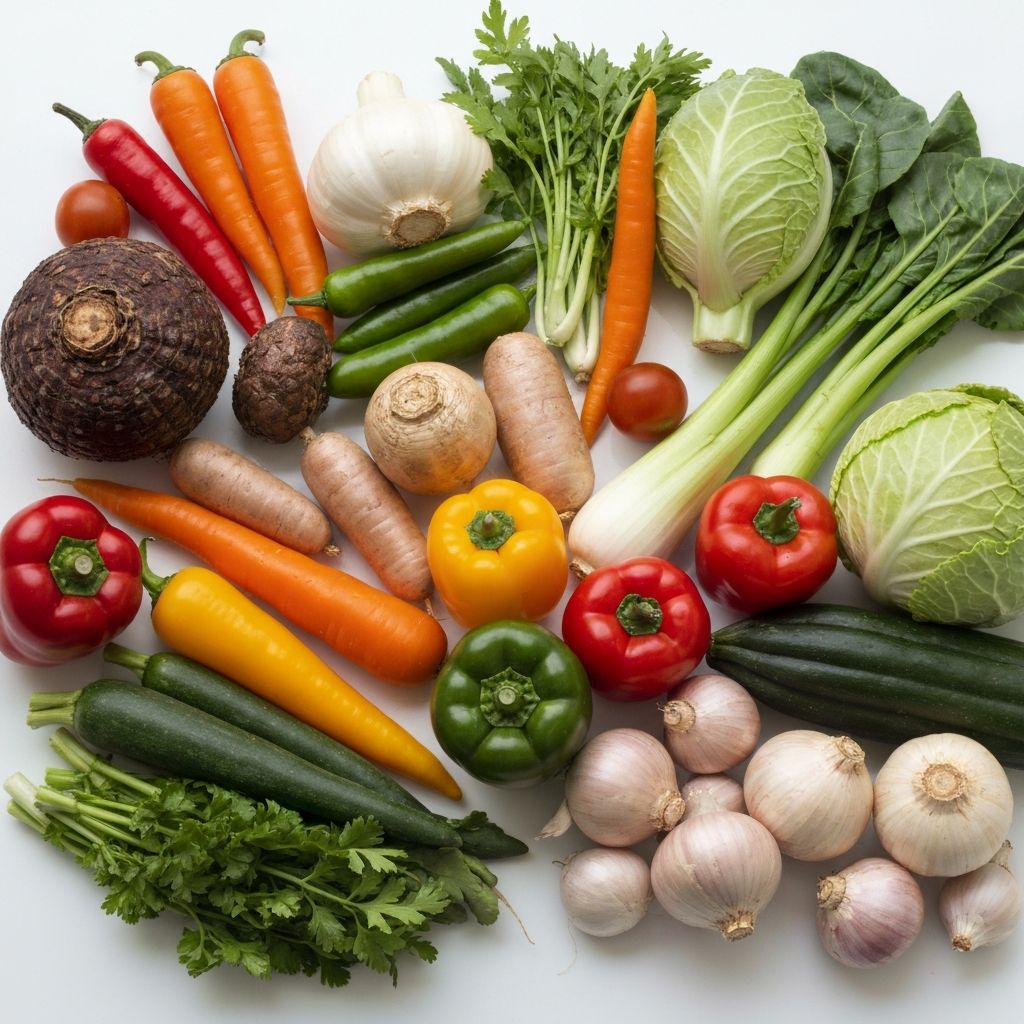
Different vegetables provide different vitamin and mineral profiles. Dark leafy greens (spinach, kale) are rich in iron, calcium, and magnesium. Orange and red vegetables (carrots, bell peppers, tomatoes) provide beta-carotene and vitamin C. Cruciferous vegetables (broccoli, cauliflower, Brussels sprouts) contain compounds with potential anti-inflammatory properties.
Consuming the same vegetables daily provides complete nutrition from those specific sources but may miss nutrients concentrated in vegetables you don't eat regularly. Variety across different types, colors, and families of vegetables expands the range of vitamins, minerals, phytonutrients, and fiber you consume.
How Vegetable Variety Affects Micronutrient Intake
Micronutrients—vitamins and minerals—are essential for countless body functions but required in small amounts. Different vegetables contain different micronutrients in different concentrations. Variety ensures broader micronutrient coverage without requiring excessive intake of any single food.
The "eat the rainbow" concept reflects this diversity principle: different colored vegetables contain different phytonutrients and micronutrients. While this is somewhat simplified, the underlying principle is sound—variety tends to broaden nutritional coverage compared to eating the same few vegetables repeatedly.
Individual Preferences and Practical Variety
Dietary variety needs to be practical and sustainable for individual preferences. Someone who dislikes certain vegetables but enjoys others should prioritize vegetables they will consistently eat rather than forcing variety they won't maintain. Starting with vegetables you enjoy and gradually exploring new options is more sustainable than trying to achieve perfect variety immediately.
Seasonal availability affects which vegetables are available and affordable at different times of year. Variety naturally develops when following what's fresh and available seasonally, rather than requiring year-round access to every vegetable. Understanding your local food systems and seasons can make nutritional variety more practical and sustainable.
Important Disclaimer
Educational content only. This explanation is provided for educational purposes and does not constitute personal dietary advice. Individual vegetable needs, allergies, intolerances, and health considerations vary significantly based on age, health status, medications, and other factors. Consult qualified healthcare professionals and registered dietitians regarding appropriate vegetable intake and dietary variety for your individual circumstances.